2. Testing isn’t racing. The fact the Chip Ganassi-fielded Ford GTs suffered a lot of problems at Daytona was not because they didn’t test, because they did. But the stuff that broke at Daytona wasn’t supposed to, such as an electronic issue that froze one car in first gear, the other car in sixth gear. There were brake issues, cut tires because the rear diffuser was rubbing against the rubber, and one of the cars needed an entire transmission change. But it’s still a long way until Le Mans, and no one should rule the Fords out. Doug Fehan, head of the Corvette program, recalled Corvette Racing’s first Daytona in 1999 and how it was ruined because they had not tested on a track with so much blowing sand, and the air filter collapsed, and the sand got in the engine. Testing isn’t racing.
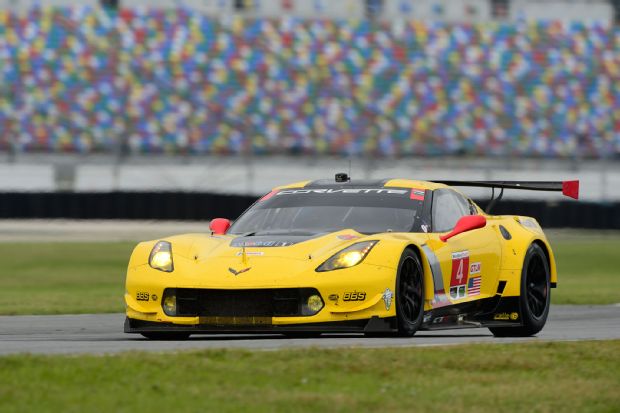
3. They were fast, but so was the competition. Some, but not all, of the cars Ford will face at Le Mans raced at the Rolex 24, including the GT Le Mans-class winners, Fehan’s factory-backed Chevrolet Corvette C7.Rs that finished first and second, an eyelash apart. Look at the fast laps for the Corvettes, the Ford GTs, the new BMW M6s, the Porsche 911 RSRs, the too-new-to-test Ferrari 488 GTEs — all ran laps in the 1 minute, 44-second range, which is amazing parity.
4. Not so much in GT Daytona. IMSA, the sanctioning body for the WeatherTech SportsCar Championship series, has what it calls a “Balance of Performance,” which uses things like weight, aerodynamics, and engine-intake size to slow down or speed up carsply too fast for the class. The former might apply to the five Lamborghini Huracan GT3 cars that debuted at Daytona. The fastest, the No. 11 car driven by 2015 season champions Townsend Bell and Bill Sweedler, who moved over from Ferrari, had a fast lap of 1:45.873. Nobody — well, except for the other Lamborghinis — could get close to that. Ben Keating, driver and owner of the two Dodge Viper teams, one of which won last year, said early on that the Lambos would have to break or crash for anyone else to have a chance. Fortunately for the competition, and perhaps IMSA, all five did one or the other. Or both. The No. 11, for instance, had electrical problems that dropped it to 30th. But expect IMSA to do something to slow the Lambos a little before the next race, the Mobil 1 Twelve Hours of Sebring in March.
5. TV coverage was great … if you could find it. New lead announcer Greg Creamer was fine, and the rest of the crew informed and professional. But the bounce between the multiple Fox channels and the Web likely left the most dedicated fan a little frustrated. It’d be nice if, say, Fox Sports 2 could suspend the martial arts programming enough to air the whole race for all 24 hours and run it online for those who can’t get FS2, but it’s hard to blame Fox and IMSA, which was trying to get the maximum per-minute bang for the buck they could out of the broadcast.
6. Who the hell is Pipo Derani? And what is a “Pipo,” exactly? There was no question that the Tequila Patron Extreme Speed Honda-Ligier was fast, but few were certain it was fast enough, or would last the race. It was, and did. But it is doubtful the team would have won without 22-year-old Brazilian driver Felipe Derani, or Pipo for short, a common nickname for Felipe, he said. Though he has done some time here in a Mazda feeder series, he has done most of his sports-car racing overseas, and he’s a test driver for chassis builder Ligier. Certainly co-drivers Scott Sharp and Johannes van Overbeek are fast, and Tequila Patron president Ed Brown does well as a gentleman driver, but it was Derani who could drive the car to the front at will and keep it there. It’s a shame we won’t see much more of him, since Brown prefers to race mostly overseas.
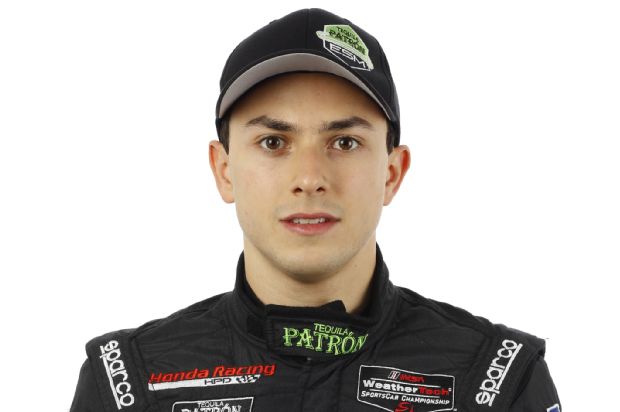
“Pipo” Derani
7. Is this the end of the Daytona Prototype dominance? When the American Le Mans Series and the Grand Am series merged at the start of 2014, IMSA officials had the tough task of writing a set of rules that made the ALMS Le Mans Prototype 2 (LMP2) cars, and the Grand Am Daytona Prototype cars — the fastest in each respective series — race competitively against each other. It wasn’t easy, as the cars are far more different than they look and make their power and speed at different places on the track. Whether it was because the rules favored them or, more likely, because there were more of them, DPs have ruled, with only two P2 wins in the last two years. But the P2 Honda Ligier that won Daytona did so in such convincing fashion that the far older DP designs may finally have met their match.
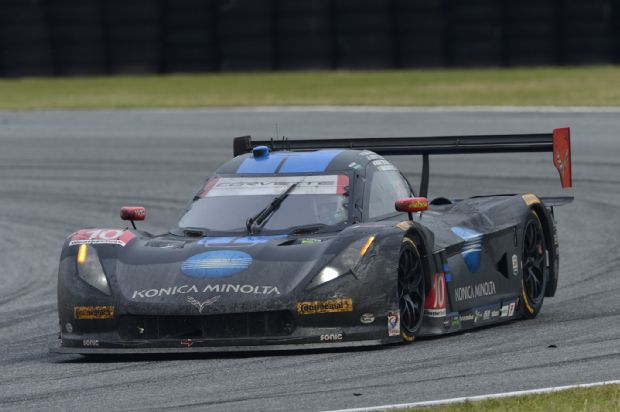
8. Of course, it was a bad day for DPs,… especially the second-place car of Wayne Taylor Racing. The No. 10 Corvette DP, driven by brothers Ricky and Jordan Taylor, honorary brother Max Angelelli, and ex-Formula 1 star Rubens Barrichello, who was called into service at the last minute because of a lingering virus Jordan couldn’t shake. Then Ricky began feeling sick Saturday morning. And at the end, the hitherto healthy Angelelli stopped the car after taking the checkered flag in second place and was rushed to the hospital, suffering from the fumes and heat caused by a broken exhaust. A stellar performance by the quartet to come home just 26 seconds behind the flying Derani and perhaps a signal to other teams to watch out the rest of the season for the guys who won’t give up.
9. Not how Scott Pruett wanted to end the day. The longtime Chip Ganassi-Ford driver left the team at the end of last season after Ganassi decided to focus not on his Daytona Prototype cars, but on the new Ford GT cars. Exactly why Pruett left depends on who you ask, but he has signed on to race the Paul Gentilozzi-fielded Lexus GT3 car assuming it shows up later this year. But in a quest to win a record sixth Rolex 24, however, Pruett chose not the Ganassi DP car, which surprised even Ford, but the No. 5 Action Express Corvette DP, joining 2015 season champions Christian Fittipaldi and Joao Barbosa. It was a solid bet — that car, led by former NASCAR crew chief Gary Nelson, is arguably the best-prepared ride on the circuit — but the No. 5 finished fourth, five laps down. Still, in the middle of the night Pruett was out there racing for the lead, looking like he did two decades ago. There are some fast laps left in the 55-year-old.
10. On to Sebring, Le Mans, and a long season. It will be an interesting year in sports-car racing: IMSA’s decision to adopt the global GT3 rules for the GT Daytona class has brought some new metal and new blood to the series, and the Prototype, GT Le Mans, and GT Daytona classes look solid. You have to wonder about the Prototype Challenge spec class, though, as the No. 85 JDC/Miller car that won was, at one time, 20 laps ahead of second place. This class could use some shoring up, but everything else is looking pretty good.
Photos courtesy IMSA photo by LAT USA.