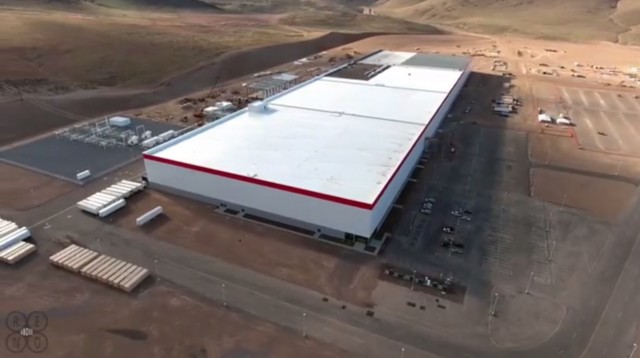
Tesla gigafactory, March 2016, shown in drone footage posted to YouTube by Above Reno
Enlarge Photo
The state of Nevada has been fairly generous to startup electric-car makers that pledge to establish manufacturing operations within its borders.
After offering a generous incentive package several years ago, the Silver State landed Tesla’s lithium-ion battery “Gigafactory,” which is now up and running just outside Reno.
Then it lured the Chinese-backed startup Faraday Future and its planned assembly plant, which broke ground in North Las Vegas last year.
CHECK OUT: Faraday Future vs Nevada treasurer: electric cars vs taxpayer protection (Jul 2016)
That plant is now stalled amidst reports of financial problems at Faraday’s overextended parent company, and its future is uncertain.
But with government tax breaks comes scrutiny from government officials—in this case, one government official in particular.
That official is Dan Schwartz, state treasurer of Nevada.
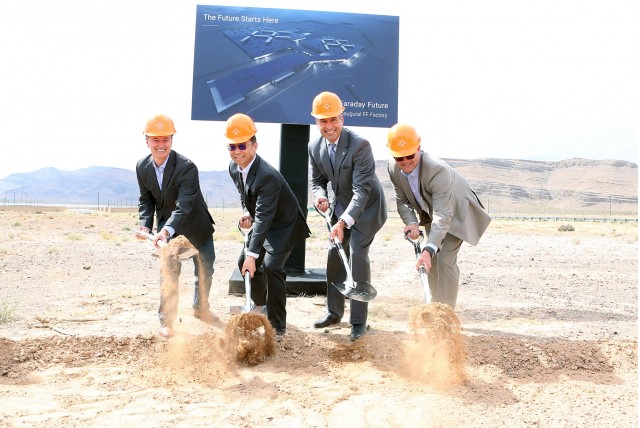
At the groundbreaking for Faraday Future’s production facility in North Las Vegas (April 13, 2016)
Enlarge Photo
Last year, Schwartz delayed signing off on a state contribution for Faraday Future over concerns about the financial stability of the automaker and its patron Jia Yueting’s holdings.
Now Schwartz has requested an audit of the Nevada Governor’s Office of Economic Development, the agency behind both the Faraday and Tesla deals, reports ThisisReno.
Schwartz’s request came after it was revealed that Tesla sold $20 million of its Nevada tax credits to the MGM Grand casino in Las Vegas.
ALSO SEE: Tesla starts cell production at Gigafactory, shows it off to investors
Under its incentive deal with the state, Tesla is allowed to sell earned tax credits at less than face value to other companies, allowing them to reduce their tax burden.
But companies buying credits may not necessarily undertake the job-creating activities Tesla did to earn the credits in the first place, presumably the reason that issuing the credits becomes worthwhile to taxpayers.
Schwartz said the audit should “examine all documents, confidential or not, which were used by GOED in vetting the projects,” that received credits, and documents that led to their approval. He wants the audit completed by Aug 1.
The office of economic development had previously stalled on releasing full details of those tax credits to ThisisReno until legal action was threatened.
Schwartz has been vocally critical of the Faraday Future factory project, calling it a “Ponzi scheme.”
He previously challenged Faraday on its ability to cover state loans.
DON’T MISS: Bowing to inevitable, Faraday Future scales back plant plans
The automaker largely pledged backer Jia Yueting’s holdings in Leshi Internet Information & Technology Company, but after several volatile months of trading on the Shenzhen market, Schwartz questioned whether they would be valuable enough to back the loan.
Faraday broke ground on its factory in April 2016, but little work was accomplished before construction was halted late last year.
The company has since moved to downsize the plant, and will likely push back its opening date.
Tesla has missed the targets for Gigafactory job creation and investments specified in its agreements with the state.
The plant is open, however, and is producing batteries for Tesla’s home energy-storage products and electric motors for its cars, and batteries for the upcoming Model 3 are on tap.
The Reno gigafactory held its grand opening last July, and began producing lithium-ion cells at the factory in January.
[hat tip: Walker O’Connor]
_______________________________________________
Follow GreenCarReports on Facebook and Twitter