
The Koenigsegg CC850 that debuted during August’s 2022 Monterey Car Week is a re-imagination of the Swedish firm’s first production car, and one of the highlights is a transmission like no other.
The CC850 uses a version of the 9-speed Light Speed Transmission from the Koenigsegg Jesko, but with a new Engage Shifter System (ESS) that makes the automatic transmission transform into a 6-speed manual (it still maintains the full automatic mode with nine gears, though). This Engineering Explained video provides a deep dive into Koenigsegg’s reinvented manual.
First, the mechanical differences. the ESS gearbox has a clutch pedal like a conventional manual, but it’s by-wire, and instead of one clutch, the ESS has seven. These clutches handle gear selection, eliminating the need for shifter forks and synchros. It also lacks a flywheel, so the engine connects directly to the transmission.
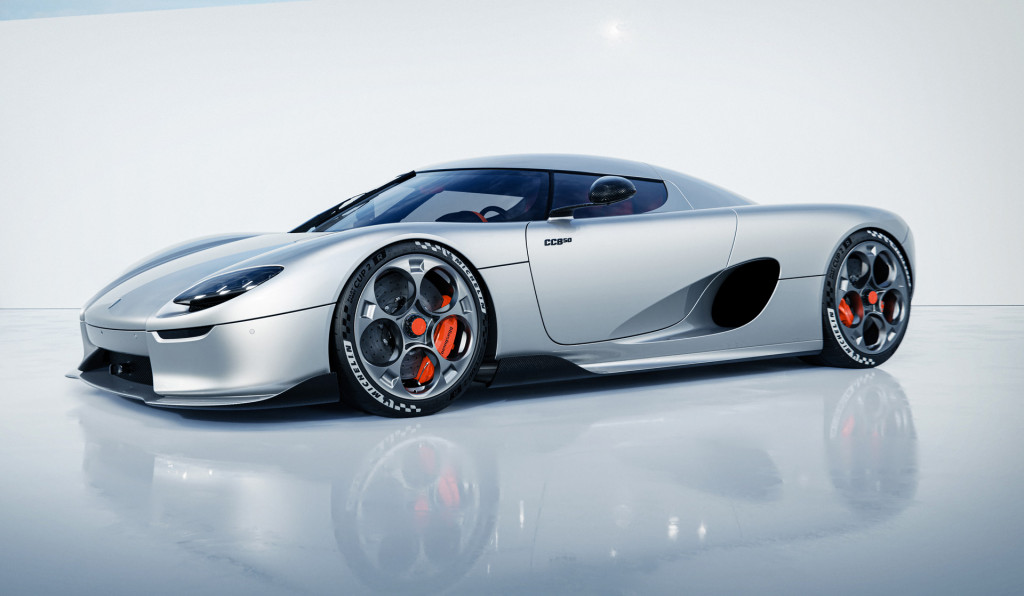
Koenigsegg CC850
The clutches are spread out across two shafts. in automatic mode, one clutch on each shaft engages to give the power a path to the rear wheels, while enabling all nine forward gears without the need for what would otherwise be a very complicated shift mechanism. As with the clutch, the shifter is a by-wire device.
In the CC850, the transmission can also be shifted manually by moving a shift lever through gates, similar to conventional manual gearboxes, while pressing the clutch pedal releases all seven clutches. Engagement still requires two clutches, but in this case a position sensor on the shifter controls the first clutch, while foot pressure on the clutch pedal controls the second clutch.
The ratio that corresponds to each gear number can also change depending on the drive mode. For example, in track mode the transmission will start out with second gear’s ratio as first, but then switch to third gear’s ratio once you get going. That effectively tightens up the ratio spread without having to physically swap out gears.
As for reverse, it depends on whether the car is being driven in automatic or manual mode. The driver uses the clutch pedal for manual mode, and doesn’t for automatic mode. And the transmission knows when the car is in automatic mode because reverse is positioned directly above drive in the shift pattern.
And while the clutch pedal is by-wire, with no mechanical connection to the many physical clutches, it’s designed to simulate the feel of an analog left pedal. That feel is replicated by software based on parameters from a traditional manual. It will even authentically stall.
That means you get the convenience of an automatic and the feel of a manual in one transmission—one that’s lighter than a conventional manual, Koenigsegg claims. Going from nine available gears in automatic mode to six in manual mode could lead to some big gaps between ratios, but even that is dealt with by the tighter ratio set used in track mode. Customers don’t seem worried about any potential drawbacks; Koenigsegg has already announced that it’s upping CC850 production to meet strong demand.


